
10 Motion Sickness Tips for Kids That Actually Work
Motion sickness can turn a dream trip into a dizzy disaster, especially when you’re traveling with kids. My daughter, son, and I all sometimes get queasy on boats, planes, and winding roads — but that hasn’t stopped us from flying, cruising, or road-tripping together. Over the years, we’ve found tried-and-true remedies that really help. In this guide, I share 10 practical tips to prevent motion sickness when traveling with children, along with advice from medical professionals and other experts linked throughout the article. You’ll also find what to do if someone gets sick mid-journey.
This website sometimes receives compensation, hosted travel, or products related to blog posts. This article may include affiliate links at no extra cost to consumers. As an Amazon Associate, I earn money from qualifying purchases.
Understanding Motion Sickness
First of all, what is motion sickness? We all know it when we feel it, but Cleveland Clinic describes motion sickness as “a common condition that happens when you’re in motion, like riding in a vehicle, while sitting still. It happens when your eyes, inner ear and body send conflicting messages to your brain. Symptoms include nausea, breaking out in cold sweat or headache.”
1. Choose Your Seats Carefully
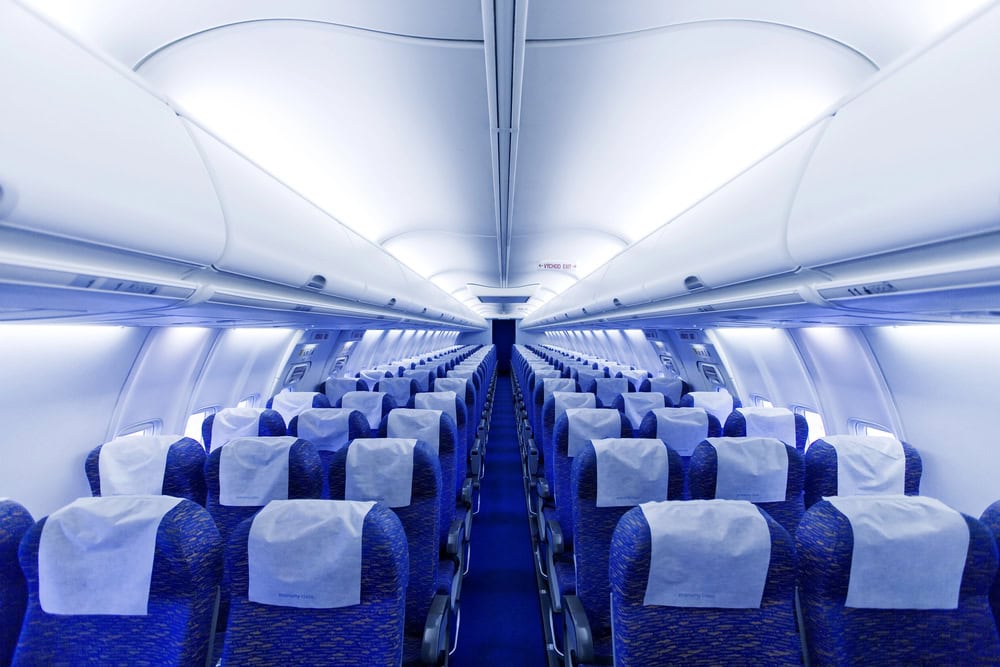
Where you sit can make a big difference. On airplanes, choose a seat over the wings or near the front of the cabin, where the ride tends to be more stable.
On cruise ships, avoid staterooms too far forward or aft, where movement is more pronounced. Choose a cabin close to the waterline, but not too low. I avoid lower staterooms, where engine noise and vibration can make motion sickness symptoms worse.
When riding in smaller boats, sit near the center for less motion. If experiencing sea sickness, head outside and focus on a stationary object in the distance. It helps your brain recalibrate by matching what you see with what you feel.
During car travel, everyone should face forward and look at the horizon. Install a young child’s car seat in the middle of the backseat to give a clear view forward and discourage travel sickness. (Still, have a plastic bag or bucket handy just in case!)
Adults can often avoid car sickness by taking over driving duty. As ePainAssist explains, “The front seat offers a clear, unobstructed view of the horizon and the road ahead, helping align visual cues with the vestibular system’s detection of motion.”

2. Stick to Small Protein-Packed Snacks
Experts at the National Library of Medicine advise against large meals before traveling. Instead, eat small high-protein snacks or light meals every couple of hours. Eating a large, heavy meal before travel can slow digestion and increase stomach acid, which makes nausea more likely when your body starts moving in ways your brain doesn’t expect. Avoid traveling with an empty stomach, too, since this can also increase stomach acid.
Don’t count on the airline to feed your family. You never know when turbulence or delays will interrupt service, leave you stuck on the tarmac, or push your arrival past mealtime. Bring along your own protein-filled travel snacks, no matter your mode of transportation.

Protein Travel Snacks for Kids
- Feel Bar Minis – Blueberry Muffin – Deliver 10 grams of plant protein and sneaks in daily veggies. (Nut-free and gluten-free)
- Blue Diamond Cocoa Almonds – A chocolaty treat with little sugar that comes in convenient 100-calorie packs. My go-to travel snack pick! (For ages 6+ due to choking hazard)
- Protein Puffs BBQ – A crunchy, salty snack with 11 grams of protein and 4 grams of fiber. (No added sugar or gluten)
- Good Snacks Snickerdoodle Protein Bars – A soft cinnamon-flavored vegan street loaded with 15 grams of plant protein. (Gluten-free, soy-free, dairy-free, and non-GMO)

3. Stay Hydrated
Dehydration can disrupt the body’s balance, so it’s essential to stay hydrated if dealing with motion sickness. When a body lacks fluids, digestion can slow and stomach acid may increase—leading to nausea or an upset stomach. Plus, loss of electrolytes (like sodium and potassium) from dehydration can also trigger cramping and vomiting.
Encourage kids to sip water or electrolyte drinks regularly, especially during long car rides or flights. Skip the sugary sodas and juices, which can upset little stomachs even more.

4. Get Some Fresh Air
Fresh air really does work wonders, especially when queasiness strikes. I always try to sit on the deck of any small watercraft, where I can breathe in the breeze and keep my eyes on the horizon.
Years ago, on a catamaran trip in Maui, the waves got rough. My husband took our then-toddler, Karissa, below deck to keep her dry, while I stayed topside. The ocean spray on my face and the wind in my hair helped ease my motion sickness. Our daughter? She threw up all over her daddy. Better him than me!
So if you’re prone to motion sickness, head outside, breathe deeply, and keep your eyes on a stable point in the distance. It helps your brain make sense of the mixed messages your body’s sending, so you feel less woozy.
When riding in a car, especially during a long road trip, be sure to make frequent stops. Then everyone can get out, stretch their legs, and restore their equilibrium.

6. Use Acupressure
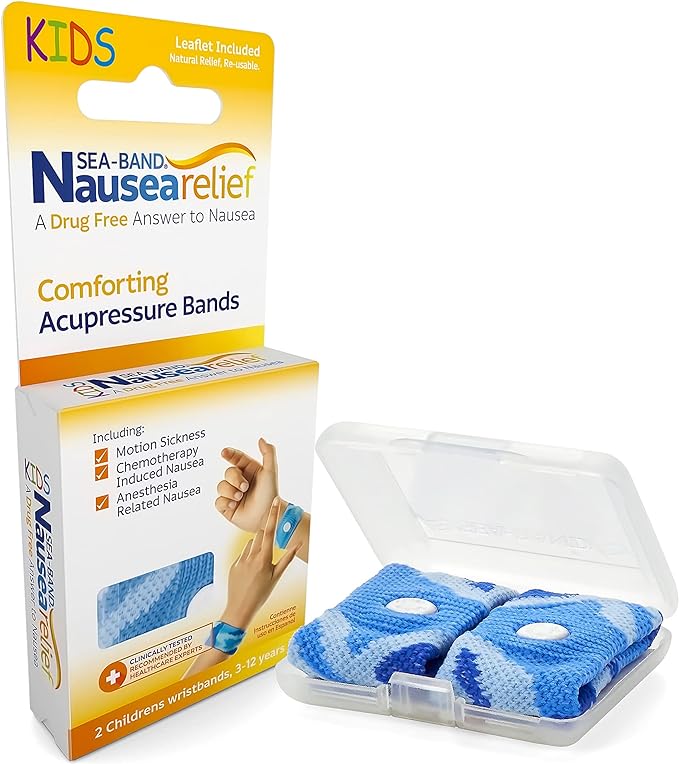
Wear acupressure bands, like those by Sea-Bands. These stimulate a spot on the wrist that’s long been used in Eastern medicine to relieve nausea. A friend swore by them during her pregnancy. My daughter and I appreciate these on flights and boats, too. While they may not erase every wave of nausea, the good news is Sea-Bands can offer comfort. Sometimes just knowing you’re doing something helps, like Dumbo’s feather.
No bands handy? The pressure point is located three-finger-widths below the hand on the inner wrist. Press hard on that spot with your other hand’s fingers and thumb. I often do this when turbulence hits on a plane ride, and I don’t want to dig through my carry-on for my bands.
5. Find the Right Distractions
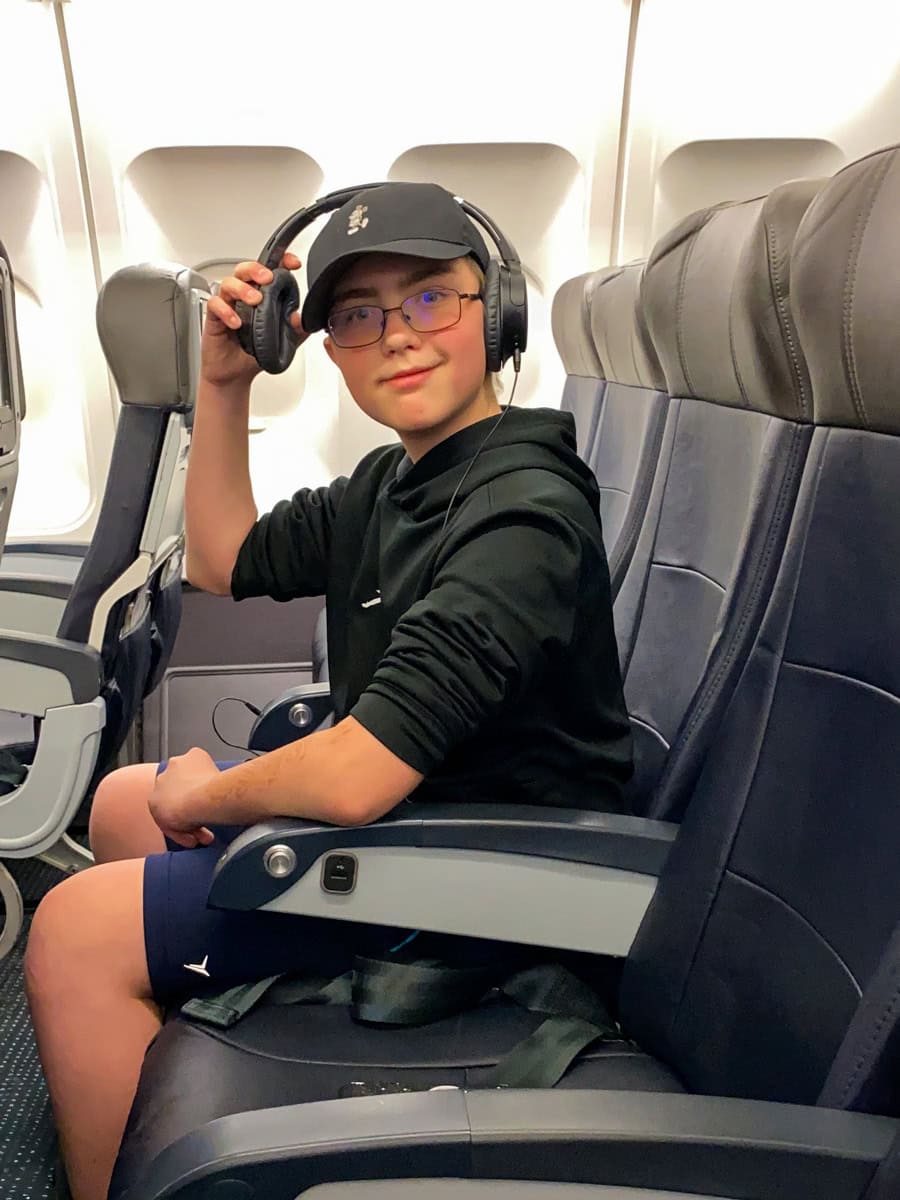
Distraction can work wonders to soothe a child’s motion sickness. Ease your child’s queasiness by looking through picture books together or playing music or audiobooks through headphones. You could also queue up a fun movie on a tablet or smartphone if this doesn’t increase symptoms. My son has no problem watching movies on an airplane, but needs to stay totally screen-free in cars.
Be sure to avoid activities that require intense focus, like reading chapter books, making crafts, or playing travel games. Don’t let kids play video games, either. These may actually make symptoms worse by increasing sensory mismatch, which I know from personal experience. The Science of Health backs this up, saying, “Looking at a book or device screen may trigger symptoms.”

7. Try Essential Oils
Essential oils for travel can be a gentle, natural way to ease motion sickness, especially for children who are sensitive to medications. Try ginger, peppermint, or a digestive blend (my favorite) to help soothe queasiness.
For kids aged 9+, take a look at these Motion Sickness Patches by 369 Life, infused with essential oils. They’re easy to use and mess-free, making them a great pick for travel.

8. Wear Motion Sickness Glasses
My friend, Candice Kilpatrick Braithwait, coauthor of Big Rich Money, said her daughter, Lucy, struggles with motion sickness and they’d tried every remedy, but nothing worked. That is, until Candice purchased a pair of Hion Kids Anti-Motion Sickness Smart Glasses. Now, whenever they head out, Lucy asks for her “special glasses” the moment she starts to feel queasy. These goofy goggles have been a game-changer for their family!

9. Eat Ginger to Relieve Nausea
Remember how your mom offered you a glass of ginger ale when you were a kid and you had the stomach flu? Well, mother knows best. Ginger is a natural aid that may help relieve an upset tummy.
According to Lauren Panoff, MPH, RD for Healthline.com, “Some studies have found that the spice may be as effective as some anti-nausea medications with fewer side effects.” She goes on to say, “The spice has anti-inflammatory properties and may improve digestion and support the release of blood-pressure-regulating hormones to calm your body and reduce nausea.”
Ginger Safety for Children
Is ginger safe for kids? Parentcircle.com says, “The University of Maryland Medical Center advises that ginger should not be used by children under two years of age. For children over two years of age, ginger can be used to treat nausea, digestive cramping, and headaches.”
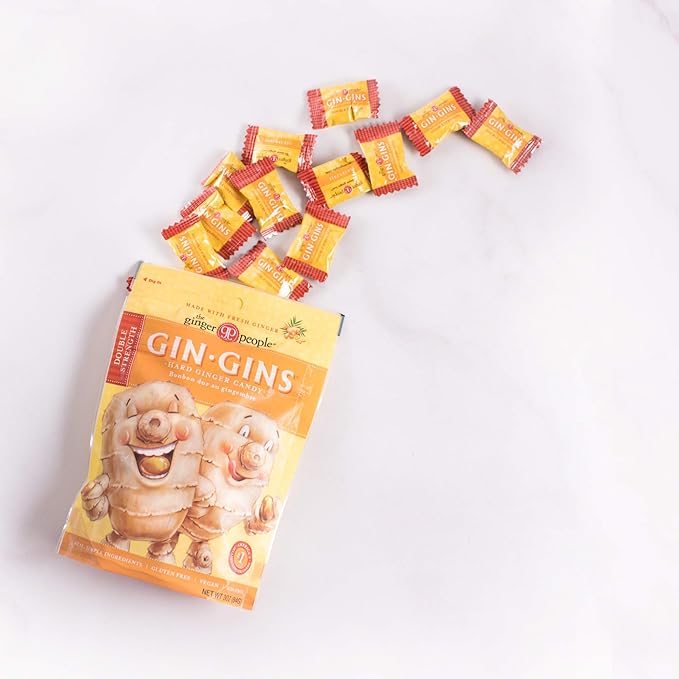
Ginger Products for Kids
- For kids aged 6+ due to choking risks, the slightly spicy but sweet Gin Gins hard candy is one of my family’s favorite motion sickness remedies.
- Ginger is the key ingredient in Dramamine’s Advanced Herbals Kids Gummies for Kids (aged 6+). It comes in both ginger and strawberry flavors.
- If a liquid formula works better for your family, consider Healthy Genetics Probiotics for Kids + Prebiotic + Ginger Root.
- Traditional Medicinals Organic Ginger Tea provides a comforting cup of digestion support in easily packed, individually wrapped tea bags.

10. Use Motion Sickness Medication
Let’s talk meds. There are two main types of motion sickness medicinal remedies for children: antihistamines and prescription-based Scopolamine transdermal patches. My family has experienced varying levels of success and side effects with these medications on cruise ships, bumpy flights, and twisty car rides.
Dramamine, Bonine, and Benadryl are antihistimines that work by calming the inner ear’s response to motion, helping prevent nausea, dizziness, and vomiting. Scopolamine patches work by blocking acetylcholine, a neurotransmitter that helps send motion-related signals from the inner ear to a child’s brain.
Antihistamines
Children’s Dramamine is a chewable tablet approved for ages 2 and up, containing dimenhydrinate, an antihistamine that calms the inner ear’s response to motion. It works best when taken about an hour before traveling or riding fun-park rides and lasts 4–6 hours.
If your child is 12 or older, Bonine is another option, which contains meclizine. Dramamine’s Non-Drowsy formula uses meclizine. This tends to cause less drowsiness than Regular Dramamine. Meclizine also lasts longer—up to 24 hours—making it a good idea for long travel days. Personally, I prefer this antihistamine because the severe grogginess caused by dimenhydrinate can make me feel even more nauseated!
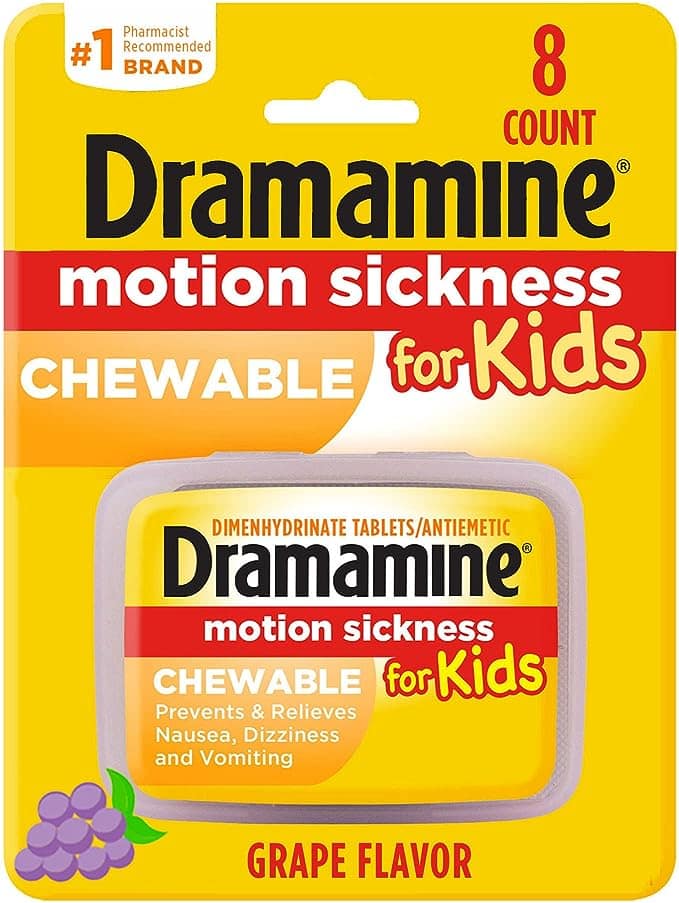
Over-the-Counter Motion Sickness Medications for Children
- Chewable Dramamine for Kids (for ages 2+)
- Non-Drowsy Bonine (for ages 12+)
- Dramamine Less Drowsy (for ages 12+)
Scopolamine Transdermal Patches
Scopolamine is the heavy-hitter for motion sickness because it works directly on the central nervous system to block nausea signals before they start. These transdermal patches require a doctor’s prescription and are only for travelers aged 12+. Worn behind the ear, they’re discreet and long-lasting (up to 72 hours), making them a popular choice for cruises or multi-day travel. Side effects can include dry mouth, blurred vision, dizziness, confusion, and occasionally a metallic taste.
My daughter wore a scopolamine patch on our last family cruise and appreciated the anti-nausea effect. However, she hated the metallic taste in her mouth and blurry vision that made it difficult to read a book poolside or even menus in restaurants.
Don’t Let Motion Sickness Ruin Your Travels
Motion sickness shouldn’t get in the way of your family’s travels. Use these tips to avoid and soothe any queasiness or headache caused by movement, and get out there to explore!

More Travel Tips for Families
Read my tips for cruising with kids to help you select the best cruise line for your family and maximize fun at sea.
Make the most of your time on the road with these tips for family road trips, from pit stop ideas to staying entertained in the car.
Learn what to do if you get sick on a cruise, from avoiding illness to recovering quickly aboard a ship.
Don’t be afraid of being “that” parent with the crying child on the airplane. Enjoy your next flight with these tips for flying with babies and toddlers.
Discover the best mocktails at sea with this list of Royal Caribbean alcohol-free drinks for all ages.
Save These Motion Sickness Tips for Kids
For future reference, be sure to save this list of 10 kid-friendly motion sickness remedies. Just pin the image above to Pinterest. Follow Colleen Travels Between on Pinterest while you’re at it!
Do you have another motion sickness tip for children or adults? Let us know in the comments below!
Disclaimer: This post is for informational purposes only and is not intended as medical advice. Always consult your child’s pediatrician or healthcare provider before starting any new medication or remedy for motion sickness.







lol, travelling with kids can be challenging 🙂
True that! I always tell my kids when we face a challenge during our travels, “It’s an adventure!”
Motion sickness is a common concern among parents. Glad to have found this article. Very helpful tips! Less motion sickness means more fun and travel.
Glad you found our motion sickness tips helpful!
I let my daughter sit in the middle of the back seat in order let her watch the road that we travel. This makes a lot of sense to relieve the motion sickness. When she is old enough to sit in the front seats we had no problem with car sickness.
Also ginger does the work very well. I always used to eat ginger spice as there was no ginger candy when I was a child. It tastes awful but much better than nausea.
Thank goodness there is ginger candy now – I’d hate to eat ginger spice! I’m glad you’ve found a way to handle your daughter’s motion sickness. Sitting in the middle to allow her to view the road is a great tip!
Loved these tips. As a fellow mama, I have discovered a product that literally changed mine and my child’s life for nausea and headaches. I found a product called NoMo Nausea Kids. It’s a 3 in 1 patent pending all natural infusion of peppermint aromatherapy within a stylish and waterproof acupressure wristband. Like she stated the acupressure on the seaband works..however, my stylish little girl refused to wear something that didn’t match her outfit. The NoMo band comes in various different colors and in different sizes. I have one for her and one for me! The essential oil is combined in the wristband to take the two remedies and put them into one. I swear by this product and would recommend it to all fellow moms out there!
Oh wow! Looking into this one, Maria. Thanks for the tip!
Oh yes my kids get motion sickness. I always keep Dramamine in the car!
Smart mom! Better to have Dramamine and not need it, than need it and not have it!
These are great tips! My daughter had motion sickness and would get sick almost every time we were in the car as a baby. To this day she still gets whoozy. It’s awful to watch them go through this.
It’s so hard as a parent to ever see our kids suffer. Even our dog gets motion sickness and it makes me so sad to see him feeling woozy!
I remember suffering from motion sickness when I was a child. My mom gave me some gum to chew on when we traveled. I guess it worked or maybe I just outgrew it. Nevertheless, I still carry a few Dramamine with me when I travel, just in case. 🙂
Better to be safe than sorry!
These are all great tips on how to address motion sickness in children. My youngest son had it slightly but outgrew it quickly. My sister still has it up until now. I know she takes Dramamine but I would like to let her know about these other tips too.
Motion sickness sometimes gets worse with hormonal changes like puberty and menopause. But for some of us, it’s just ALWAYS bad. Sigh. Thanks for sharing the tips with your sister!
Thankfully my kids didn’t inherit my husband’s motion sickness. You’ve listed one great strategies for dealing with ot. Ginger helps him a lot.
Oh thank goodness your kids didn’t get it! Typically women and girls suffer more than men (something to do with hormones). Too bad that your husband is one of the unlucky guys who suffers from motion sickness!
I used many of these remedies to fight feeling nausea when I was pregnant. I remember how useful the Sea Bands and ginger was. I can imagine they would be just as great to fight off motion sickness.
Estelle – I’m glad these methods worked for your morning sickness…and that you don’t suffer from motion sickness!
These are all great suggestions. We are flying to Europe this summer and I am worried about sickness on the plane. We usually take ginger gum with us and that seems to help, but we’ll also take some essential oils and maybe some of those Gin Gins too.
We’re headed to Europe next week and I have the same worries. I’m going to be loaded up with ALL of these goodies to keep my daughter and I feeling well as we head overseas. Have a great time in Europe this summer!
Fortunately, our kids don’t get motion sickness. I do, however, have a family member who’s son does. I would recommend these tips to her.
Thank you for sharing with your family member, Makeba!
Forgot my kiddos – I’m the one whose the hot mess in the family when we travel. Solid tips and really, I just need to remember that I should pop the Dramamine before traveling! I always want to avoid it because I don’t want to be drowsie or feel like I have a hang-over but I always regret NOT taking something.
I hear you, Monica. Been there, done that. I do find that the Dramamine does help to lessen my symptoms, though, even if I wait to take the pill. I know that’s not true for everyone, but it might work for you.
Thanks so much for sharing these tips! One of my kids gets motion sickness, which makes travel miserable for them. They love being at the destination, but getting there is really hard on them.
So tough. I hope these tips can help make the journey smoother for your family!
Avoid the smell of a diesel-powered motor like that of an ocean fishing boat.