
10 Best Places to Visit in Europe in Summer
Home to 50 countries, each with its own culture, history, and appeal, there is much to love about Europe. But summers in Europe can be sticky, with steamy temperatures, inflated hotel prices, and crowds swarming popular tourist destinations to snap selfies in front of the Mona Lisa or the Roman Colosseum. Swap the crowded hot spots for these appealing locales instead. Let’s uncover the best places to visit in Europe in summer, where the weather is better, prices are lower, and there is more room to explore than the usual over-touristed major cities.
This website sometimes receives compensation, hosted travel, or products related to blog posts. This article may include affiliate links at no extra cost to consumers. As an Amazon Associate, I earn money from qualifying purchases.
1. Instead of Paris, Visit Montpellier
The City of Lights is so beautiful, so fashionable, and so crowded in summer months. In fact, Paris consistently ranks among the most-visited cities in the world, and it is the capital of the most-visited country, according to World Population Review.
If you’re craving stylish sidewalk cafés and pretty French architecture in a walkable city at a fraction of the cost, take France’s high-speed TGV train from Paris just over three hours south to Montpellier. You’ll get a lot more croissants, wine, and hotel space for your Euro in Montpellier than in Paris.
I lived in this vibrant student city for a year and fell in love with its pedestrian‑friendly center and youthful energy. Montpellier is actually less crowded in summer than at other times of the year because college kids (like I was) head home for the season.
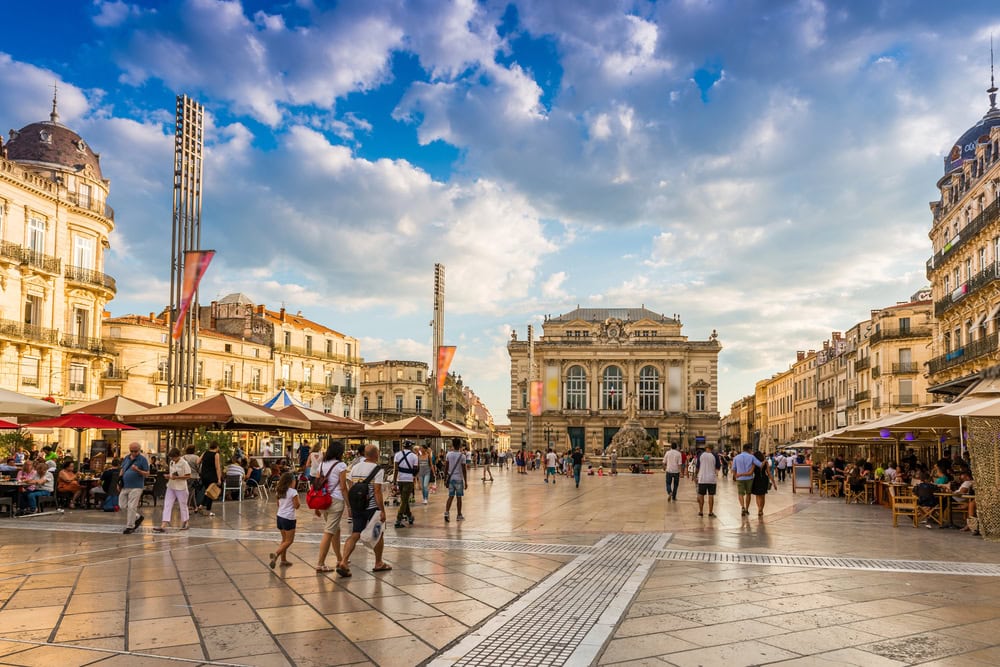
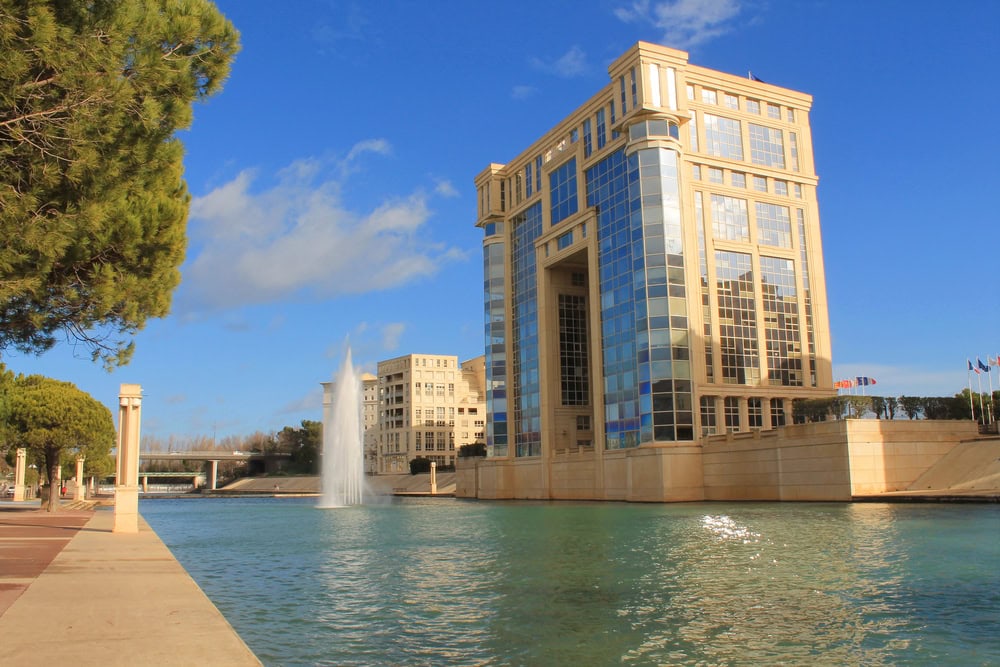
Montpellier blends medieval churches, Paris‑style 19th‑century boulevards, and bold contemporary design into one of the most architecturally eclectic cityscapes in France. Enjoy people-watching from the stunning central square, La Place de la Comédie. Avoid the throngs of vacationers at the Louvre and instead get your art fix at Musée Fabre, Montpellier’s premier fine-arts museum. What’s more, Montpellier is just 7 miles (11 km) from the beach, offering a sunny city escape with easy access to the Mediterranean Sea.
2. Instead of Rome, Visit Plovdiv
Rome’s ancient wonders, grand piazzas, and world‑class museums draw about 35 million visitors each year. Especially in summer, expect dense crowds and long queues. The season’s heat can be intense, too, detracting from the allure of this historic and captivating city.
For a more relaxed and affordable summer holiday infused with a rich history, head to Bulgaria’s second-largest city. Plovdiv is one of Europe’s oldest continuously inhabited cities. It offers Roman ruins, Ottoman‑era architecture, and colorful Bulgarian Revival houses in a compact, walkable center, all with generally cooler temperatures and less humidity than Italy’s capital.
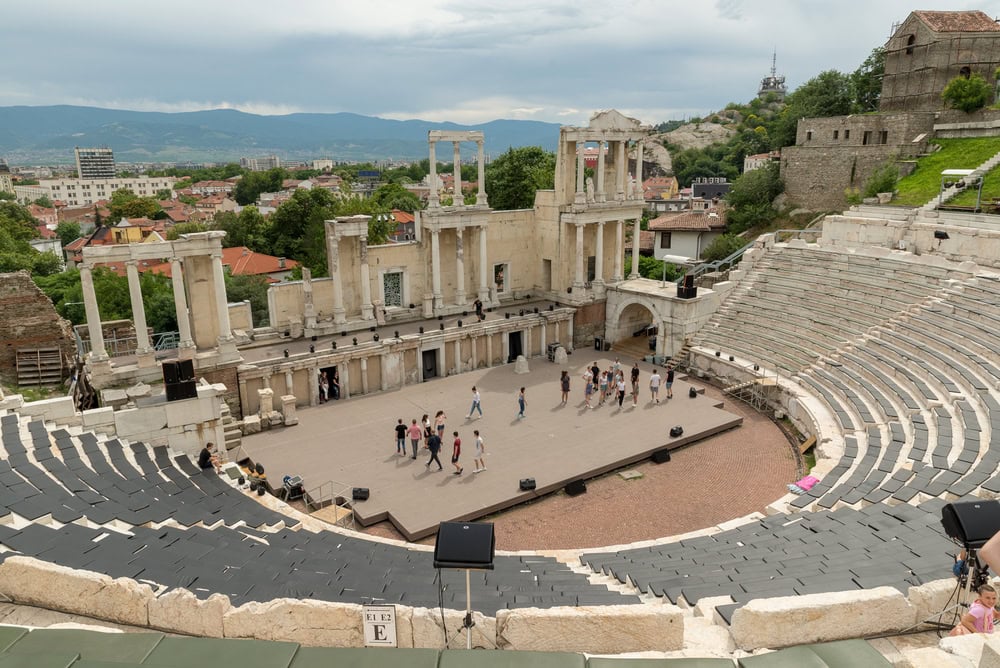
Plovdiv’s Old Town is a beautifully preserved district of cobblestone streets, ornate 19th‑century mansions, and panoramic viewpoints. The Ancient Theatre of Plovdiv is one of the best‑preserved Roman structures in existence and is still used for concerts today. Down the hill, the Kapana Creative District buzzes with street art, indie boutiques, and open‑air cafés that spill into pedestrian streets. With fewer visitors than Rome and a slower pace, you can explore Plovdiv’s museums and historic sites often with no lines at all.
3. Instead of Amsterdam, Visit Stockholm
Amsterdam, one of the busiest international flight hubs in Europe, receives almost 10 million tourists per year. The bike-friendly, egalitarian city boasts picturesque canals, colorful architecture, and iconic museums.
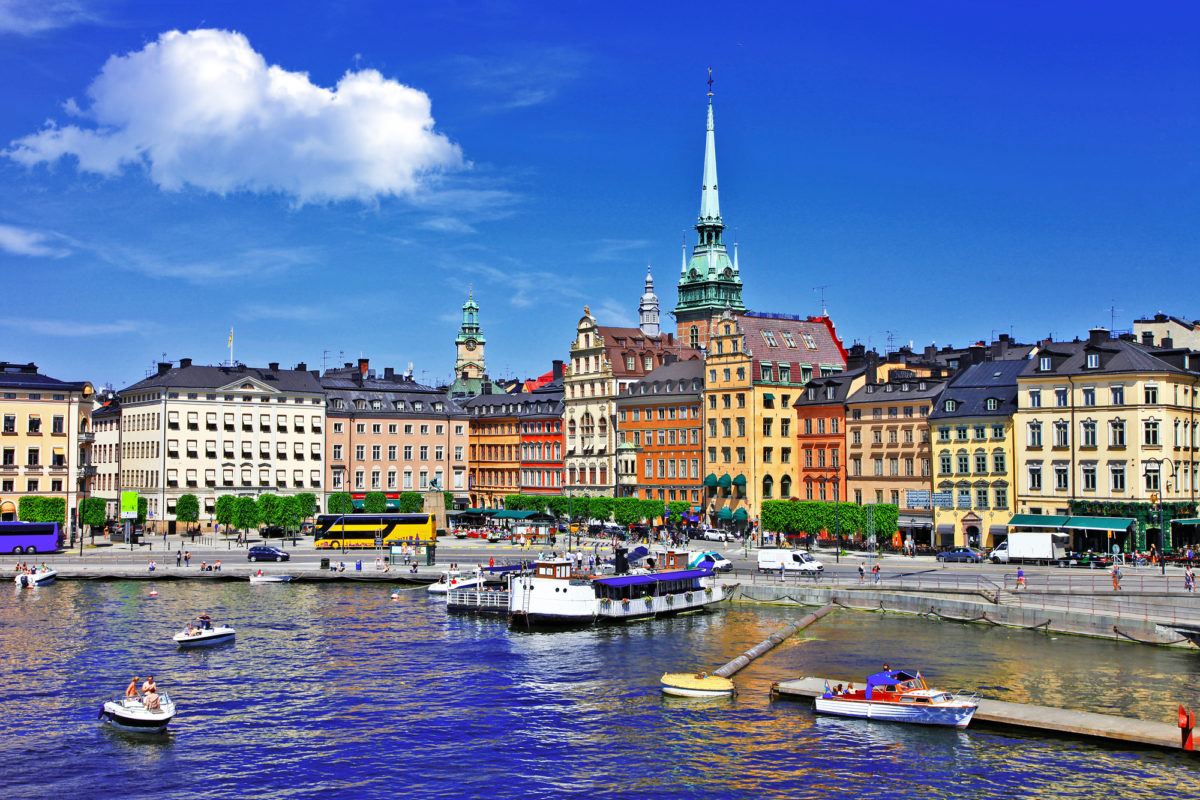
Sweden’s capital, Stockholm, offers much of the same charm, but with significantly fewer crowds in summer. Stockholm sits on 14 islands connected by bridges, where the Baltic Sea and Lake Mälaren meet. The result is frequent water views with brightly painted Scandinavian buildings. Stockholm is also one of Europe’s greenest capitals, with plentiful gardens, including on the huge royal park island of Djurgården.
For museum lovers, the Vasa Museum is a must-see. Built around a massive 17th‑century warship that was recovered almost perfectly preserved after 333 years underwater, it’s among the most memorable museums I’ve ever visited. Other notable options include Skansen, the world’s oldest open‑air museum, and ABBA The Museum.
Long summer days with up to 18.5 hours of sunshine provide plenty of time to explore. Plus, pleasant daytime temperatures around 68–72°F (20–22°C) make Stockholm one of Europe’s most comfortable cities in summertime.
4. Instead of Berlin, Visit Basel
Berlin is Germany’s hip, modern, and open-minded capital with a complicated past. Once split in two by political lines drawn after World War II, the former communist East Berlin and democratic West Berlin were reunited in 1990 with the fall of the Berlin Wall. Today, Berlin intrigues art lovers, history buffs, and punk rockers alike, making it one of Europe’s most visited cities.
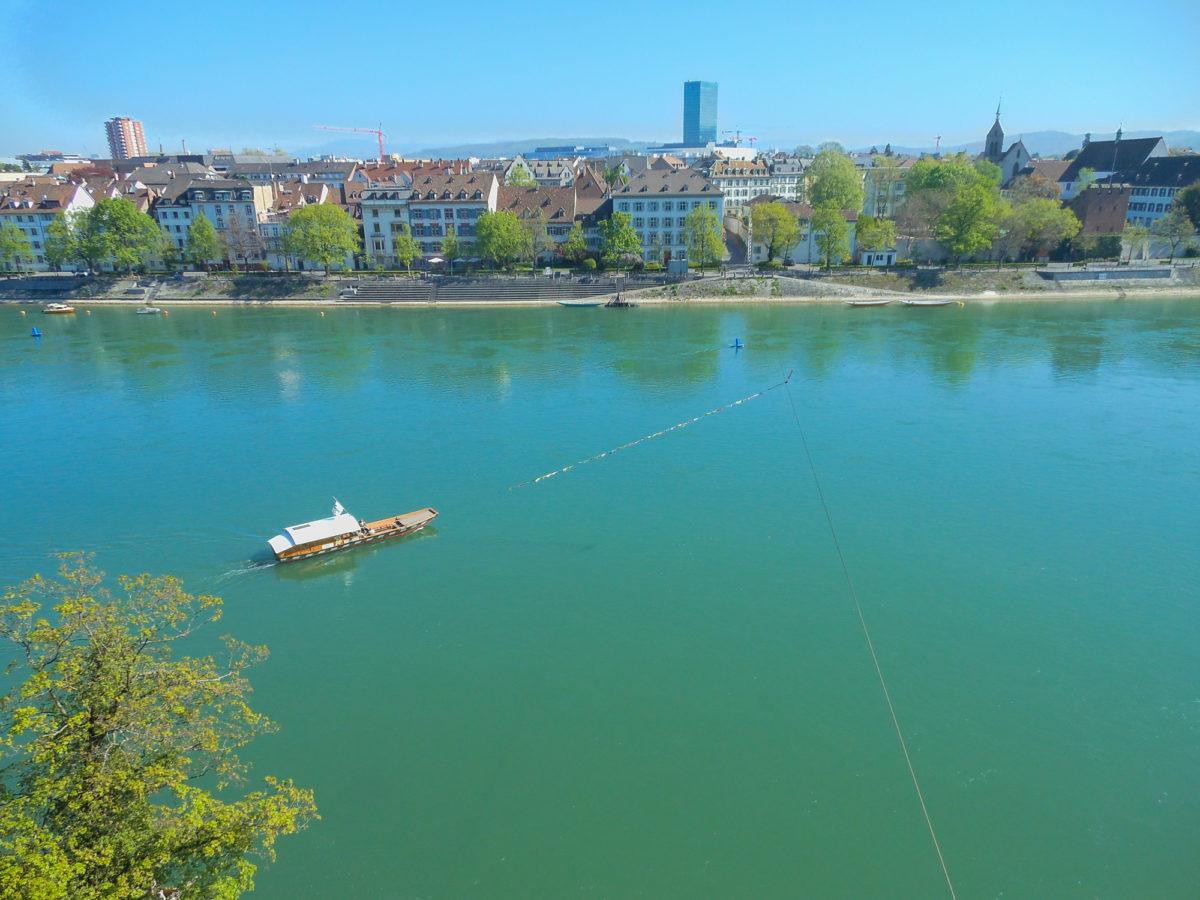
Basel is a place where you can soak up world‑class museums, river culture, and medieval history without battling the overwhelming summer crowds that pack Berlin. This Swiss city is also divided, not by international decree, but by the Rhine River. On the Old Town side, Grossbasel holds the city’s medieval heart, with the red sandstone Basler Münster cathedral and winding cobblestone lanes. Across the bridges, Kleinbasel presents a more modern, multicultural vibe with contemporary buildings and a diverse food scene.
In summer, join locals floating down The Rhine on buoyant Wickelfisch bags — a joyful, sun‑soaked ritual that often doubles as a work commute. In contrast to Berlin’s late-night, anything-goes nightclub scene, Basel offers open-air bars and indie cafés along a lively riverfront scene.
Basel packs in nearly 40 museums, a remarkable number for a city of its size. Big hitters include the Kunstmuseum Basel, home to one of Europe’s most important fine‑arts collections, and the Fondation Beyeler, renowned for its contemporary and modern art collections. On the other side of the spectrum is the delightfully tiny Hoosesaggmuseum, built into a street‑side window and displaying rotating micro‑exhibits. The world‑famous annual art fair, Art Basel adds to the city’s reputation as Switzerland’s cultural capital.
5. Instead of Barcelona, Visit Alicante
Barcelona in Spain’s Catalonia region lures visitors by the boatload and planeload each summer. There’s a lot to love about this Spanish city: the intricate La Sagrada Familia cathedral and other Antoni Gaudí attractions, the bustling La Rambla promenade, and beaches along the Mediterranean Sea. In fact, it might be loved a little too much.
That’s why Alicante makes such a compelling alternative. Located on Spain’s Costa Blanca, this seafront city offers sunny days, sandy beaches, and an alluring Mediterranean atmosphere without overwhelming summer crowds. While Barcelona is slightly cooler, Alicante has less humidity and offers more sea breezes. Alicante is also more budget‑friendly, with lower hotel rates and less expensive dining.
Alicante’s hilltop Santa Bárbara Castle is one of the largest medieval fortresses in Europe, providing a glimpse into the past and panoramic views over the city and sea. The city’s historic old town, El Barrio, is filled with white-washed buildings and hanging potted plants. Also, the two-story Mercado Central de Alicante offers a lively market similar to Barcelona’s Boqueria.
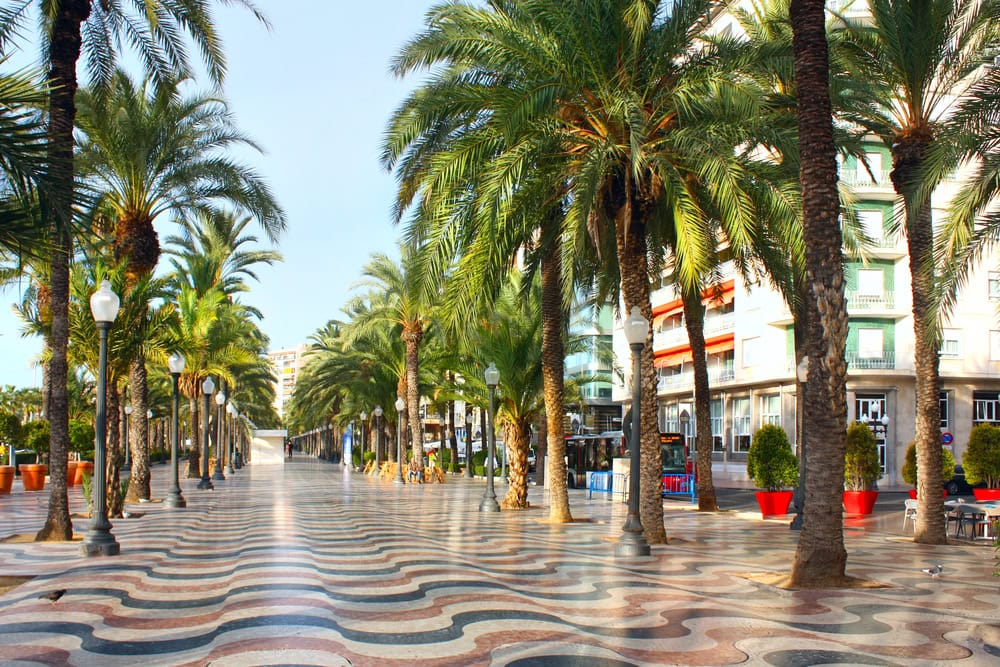
Barcelona’s urban beaches can be hot and crowded in summer, with coarse sand and pebbles. Alicante, on the other hand, is a true beach lover’s paradise featuring expansive stretches of soft, golden sand. Instead of La Rambla, visitors stroll the Explanada de España pedestrian walkway, famous for its intricate wave-inspired tiled design.
6. Instead of Lisbon, Visit Porto
Lisbon has surged in popularity in recent years, with record-breaking tourism growth. It’s easy to see why. Portugal’s capital offers monuments from the Age of Discovery, beautifully tiled walkways and historic buildings, and the delectable pastéis de nata egg tarts.
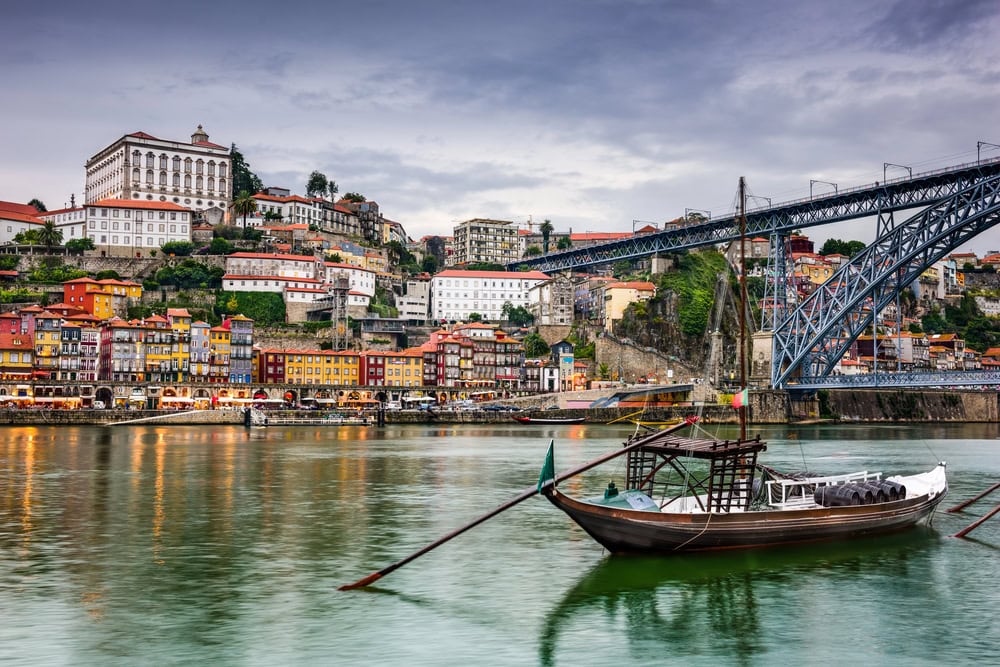
Portugal’s second city, Porto, offers much of this, but with fewer crowds and cooler temperatures. According to Numbeo, Porto is more affordable pretty much across the board as well.
You’ll find azulejos throughout the country, and Porto is no exception. These fanciful blue-and-white Portuguese ceramic tiles decorate such landmarks as São Bento Train Station and the cloister courtyard of Porto’s Cathedral (Sé do Porto). The tile-bedecked exterior of Igreja do Carmo, an 18th-century Baroque-Rococo church, is one of the city’s most photographed sites.
Porto is also the gateway to Portugal’s wine country. The picture-perfect terraced vineyards of Douro Valley produce fortified Port wines, full-bodied red blends, and crisp whites.
And, yes, you can get a taste of Portugal’s most famous pastry, pastel de nata, while in Porto. There are many options, but Manteigaria specializes in the buttery tarts. For a unique Porto twist, try Natas D’ouro, where you can get pasteis de nata in a variety of flavors, including Port wine.
7. Instead of the French Riviera, Visit the Albanian Riviera
A playground for the rich and famous, the French Riviera is known for its stunning coastline, private beach clubs, fancy hotels, Michelin-starred restaurants, and marinas filled with superyachts. Summer lures crowds of wealthy vacationers, especially in hotspots like Nice, Cannes, and Saint-Tropez.
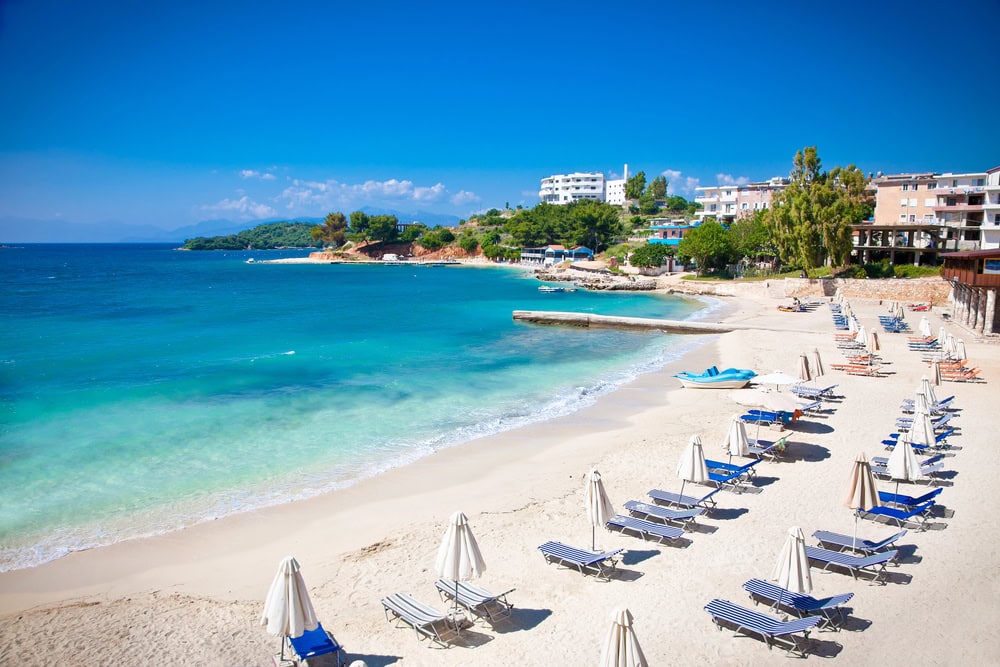
Skip the packed beaches and opt for the crystal-clear waters and vastly less expensive amenities of the Albanian Riviera. Many of the beaches along the Ionian Sea are free to the public, with affordable sunbeds and umbrellas to rent.
Rather than upscale restaurants, expect family-run, waterfront tavernas. Order a healthy array of seafood, lamb dishes, Mediterranean salads and vegetables, and byrek (stuffed filo pie).
Visitors can stay in small boutique hotels, aparthotels, and local guesthouses, or take advantage of luxury beachfront accommodations at a fraction of the cost of the French Riviera in dozens of beach towns. Sarandë is known as the unofficial capital of the Albanian Riviera, with a long seafront promenade, multiple beaches, and easy access to Butrint National Park and the Instagram-famous Blue Eye spring. A popular choice for families is Ksamil, with its white sandy beaches and calm, shallow waters. For beach clubs, nightlife, and gorgeous beaches, Dhermi is the place to be.
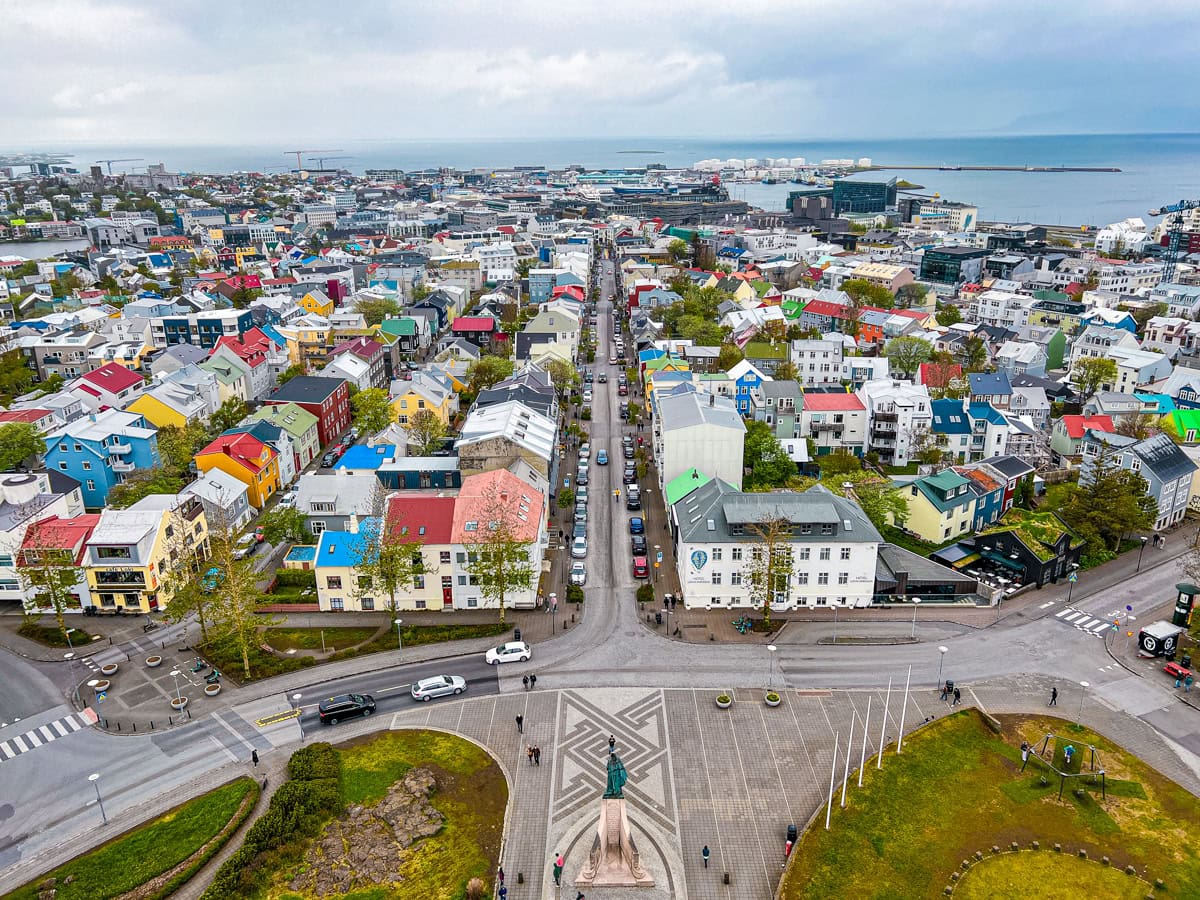
8. Instead of Edinburgh, Visit Reykjavik
Inspiration for the fictional town of Hogsmeade from Harry Potter lore, Edinburgh has a storybook feel. Picture gothic spires, a castle perched on volcanic rock, and winding cobblestone lanes. In the summer, Edinburgh bursts with crowd-drawing festivals, including the wildly popular Fringe Festival.
But even at the height of summer, Reykjavik feels lively without being overwhelming, thanks to Iceland’s wide‑open landscapes and the city’s relaxed pace. This small country isn’t cheap by any stretch, but its slightly closer proximity to North America, along with frequent flight deals, can make getting there more affordable than other European destinations. Plus, Edinburgh’s festival season causes price spikes that can match or even exceed Reykjavik’s.
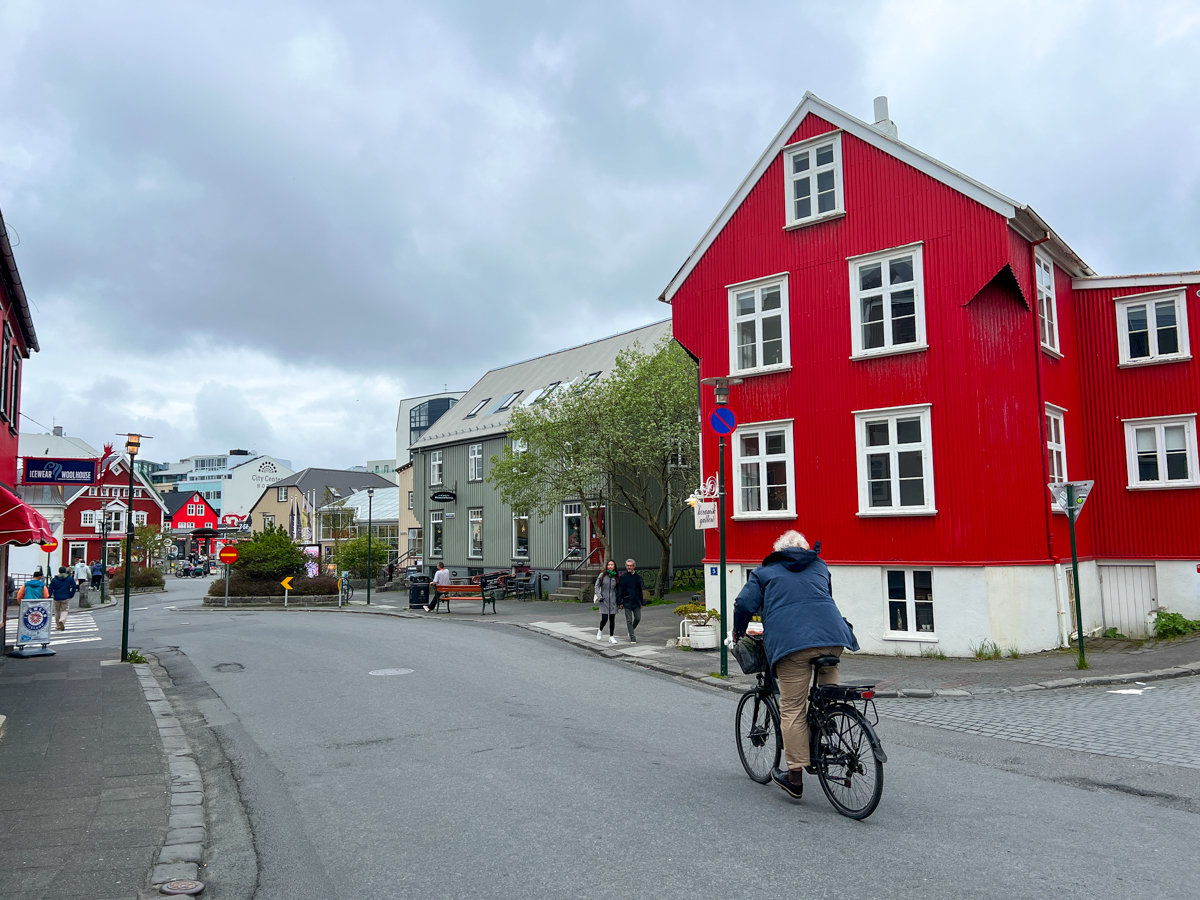
Reykjavik’s magic comes from its brightly colored Nordic buildings, surrounding natural beauty, and dreamy hot springs. Ooh and aww at erupting geysers, thundering waterfalls, and an aqua blue volcanic crater lake during a Golden Circle day trip. Then soak in a steaming, mineral-rich geothermal pool, like the Blue Lagoon or Sky Lagoon. Within the city itself, a rainbow-painted street leads locals and visitors to the treasure of Hallgrimskirkja, a unique Evangelical-Lutheran church that was built to resemble the country’s basalt lava shards.
You may be surprised by the variety of foods in Iceland. Enjoy an abundance of fresh fish and seafood, famous street hot dogs, and an impressive array of international and fusion cuisine. Plus, the country has a penchant for creative craft cocktails that are sure to impress adult palates.
With up to almost 21 hours of daylight in summertime, Reykjavik makes exploring easy. Iceland is where to go to escape continental Europe’s summer heat, with cool and mild weather typically hovering in the 50s and low 60s°F (10–16°C).
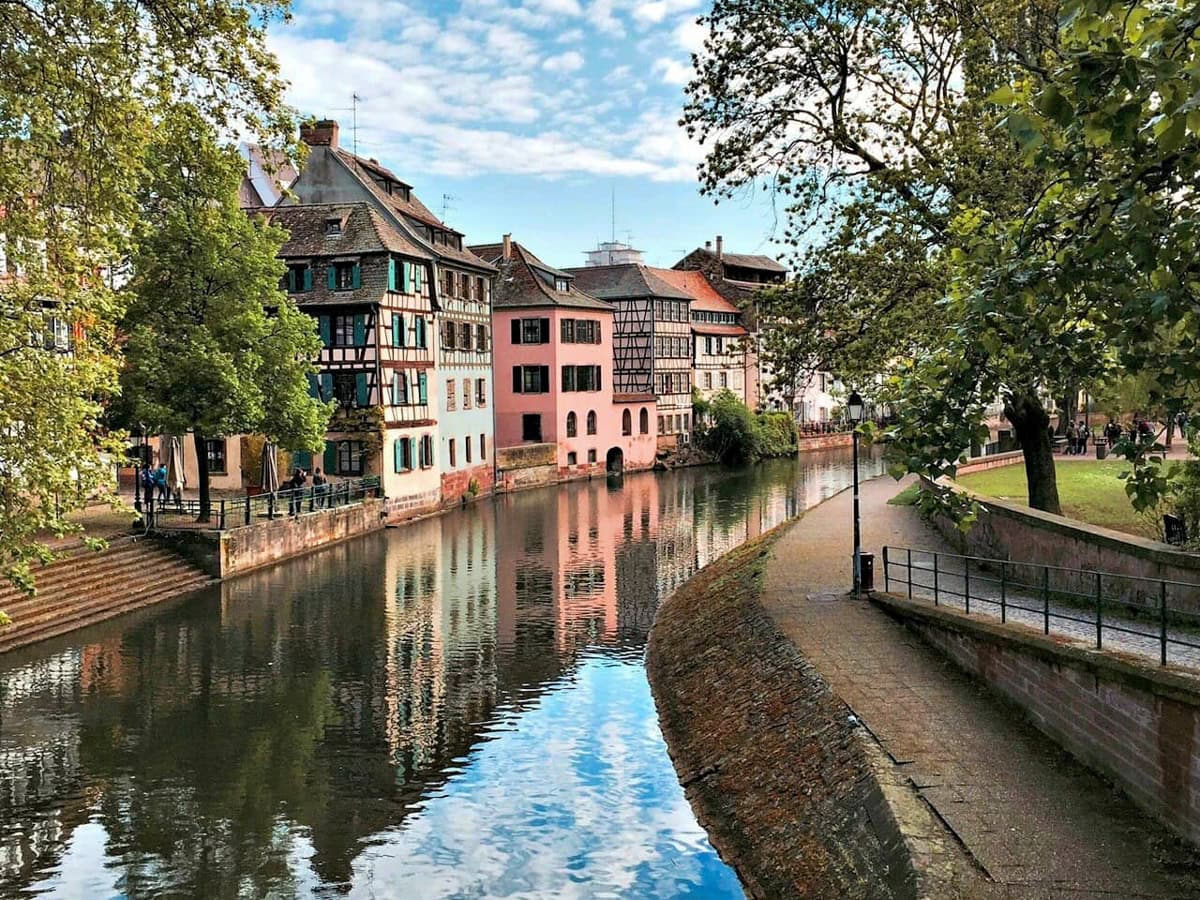
9. Instead of Munich, Visit Strasbourg
Munich is one of Germany’s most beloved cities, known for its beer gardens, grand squares, world‑class museums, and the ornate Glockenspiel clock that draws crowds to Marienplatz, the central square. Summer is especially busy with travelers pouring in for warm‑weather festivals and day trips to Neuschwanstein Castle and the Bavarian Alps.
Strasbourg feels like a French fairytale with a German accent, from the city’s medieval half-timbered houses to its scenic canals and soaring Gothic cathedral. Visitors enjoy an appealing blend of German and French influences in the city’s cuisine, culture, and appearance.
Cathédrale de Notre Dame de Strasbourg is not only beautiful but also it is the tallest medieval building in Europe. While Munich’s Glockenspiel charms crowds with its dancing Bavarian figures, Strasbourg’s cathedral houses an equally mesmerizing astronomical clock, L’Horloge Astronomique, complete with moving apostles, symbolic figures of the stages of life, and even a crowing rooster.
Alsatian cuisine combines traditional German food with French flair. Strasbourg is home to brasseries, bakeries, and breweries, as well as fancy restaurants offering prix-fixe fare. In addition to delicious German-style beers, you can sip the region’s renowned Riesling wines with your meals.
Strasbourg’s famed Christkindlesmarik is the most popular Christmas market in France. Find darling Christmas decorations and ornaments sold in shops throughout the city in summer, but without the crush of winter holiday crowds.
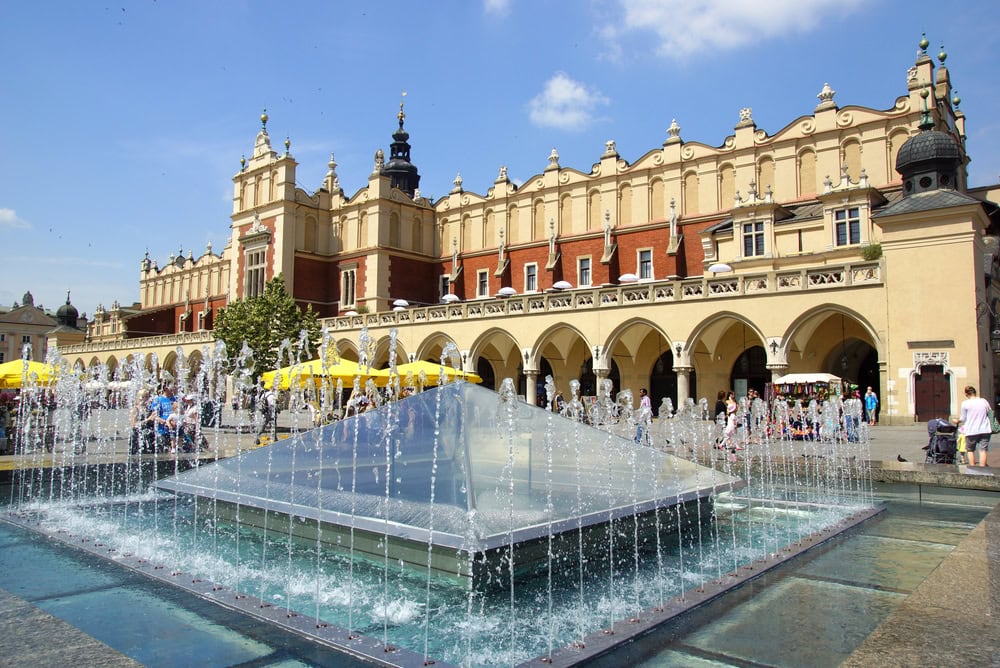
10. Instead of Prague, Visit Kraków
Prague in the Czech Republic is undeniably beautiful, with medieval lanes, river views, grand architecture, and the statue-lined Charles Bridge. But its compact Old Town fills up fast in summer. Popular spots stay crowded from morning through evening, and hotel prices climb sharply during peak season.
Poland’s capital city, Kraków, offers a similar historic charm with a calmer feel and lower prices. The Old Town centers around Rynek Główny, a vast medieval square lined with cafés, market stalls, and the towers of St. Mary’s Basilica. Explore Wawel Castle, perched above the city on a limestone hill, to learn about Polish kings and Kraków’s long history. Then, wander quiet side streets or walk along the Vistula River without the constant press of tour groups.
Kazimierz, the former Jewish quarter, adds character with its cozy shops, street art, and buzzing restaurants. The city’s food is excellent, too, from traditional pierogi to a growing fine-dining scene. Kraków has a warm, easygoing atmosphere that visitors can’t help but fall in love with.
Tips for Visiting the Best Summer Destinations in Europe
Planning a summer trip to Europe is easier when you know how to avoid the worst of the heat, crowds, and peak‑season prices.
Time your trip wisely. Book your stay early to help secure overnights at the best boutique hotels or other accommodations in smaller European cities. If possible, travel in late May, June, or early September for milder weather and fewer crowds.
Stick to public transit to move between walkable neighborhoods and scenic regions without the stress of summer driving. Europe’s train system is a comfortable, efficient, affordable, and pleasant way to enjoy the scenery.
For all the fun with less hassle, Europe small group tours can be a smart and social option. Let experts plan the itinerary, book the accommodations, secure skip‑the‑line tickets, and weave in local insights and historical context.
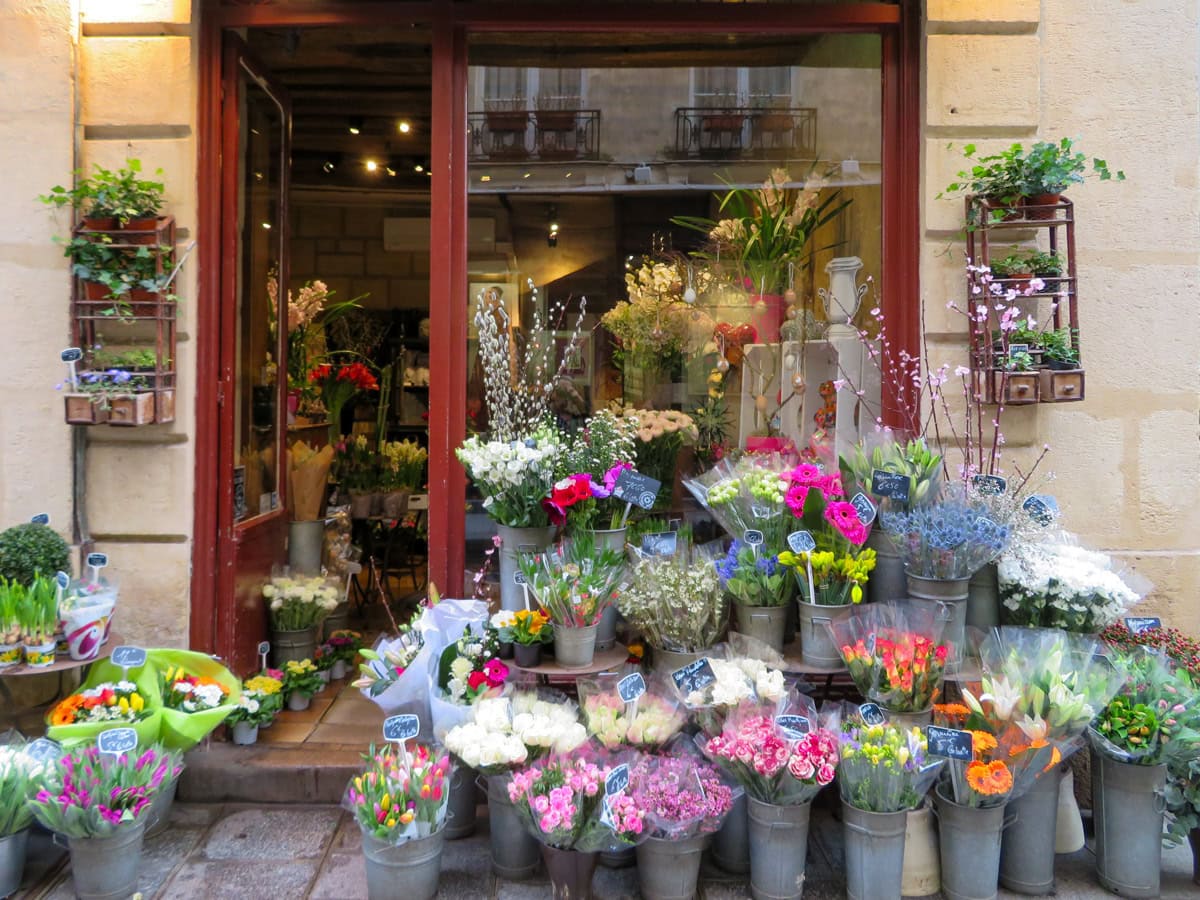
Visiting Europe in Summer FAQ
When is summer in Europe?
Astronomical summer runs from June 21 to September 22 in the Northern Hemisphere. For travel purposes, Europe’s summer season begins in late May and continues through August, with early September still offering warm weather and lighter crowds.
What should I know about traveling in August?
August is peak summer vacation month for many Europeans, especially in France and Italy, so some restaurants and small shops may close while locals travel. Top attractions stay open, but crowds and prices are at their highest.
What should I pack for Europe in summer?
Pack lightweight, breathable clothing for Europe’s warm summer weather, along with a light sweater or jacket for cooler evenings. Bring comfortable walking shoes for cobblestones and long days on your feet. A universal travel adapter, a refillable water bottle, and a mobile charger are necessities. Carry a small day bag and a scarf or wrap for modest dress requirements at certain churches or religious sites.
Are less popular European destinations worth visiting?
Absolutely. Less‑visited cities and regions often offer cooler weather, authentic food scenes, historic charm, lower prices, and fewer crowds than Europe’s most famous destinations.
How can I save money on a summer trip to Europe?
Visit smaller cities with more affordable accommodations and attractions. Look for flight deals and book as soon as you see prices dip. Pack light to avoid baggage fees. Use a credit card that accumulates travel rewards points for hotels or flights (and pay it off monthly). Choose hotels with included breakfast. Visit European markets to purchase picnic items for lunch in a local park. Walk or use public transit, such as trains and buses, instead of Ubers, taxis, and rental cars.
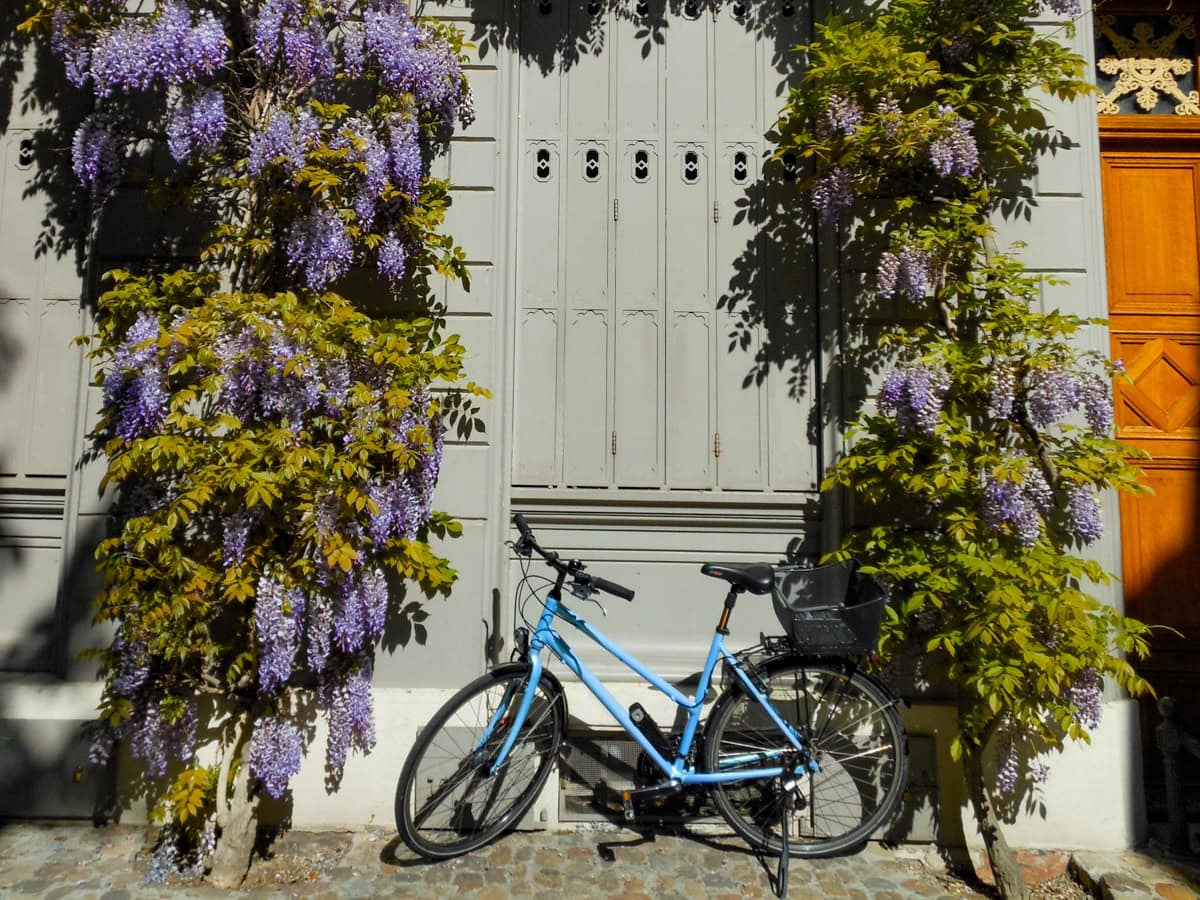
Explore More of Europe
Traveling with children? Discover the best places to visit in France with kids, from the Eiffel Tower in Paris to the shores of Normandy.
Enjoy flamenco, tapas, and the Royal Alcazar with this list of the best things to do in Seville, Spain.
Renowned for its soaring Gothic cathedral and the unique Kölsch beer, learn what to do in Cologne, Germany, in one day.
Lovers of sunshine, Picasso, and ancient ruins will love these marvelous things to do in Málaga, Spain.
For a luxury beach vacation sure to wow the whole family, read my review of Martinhal Sagres in Portugal’s Algarve.
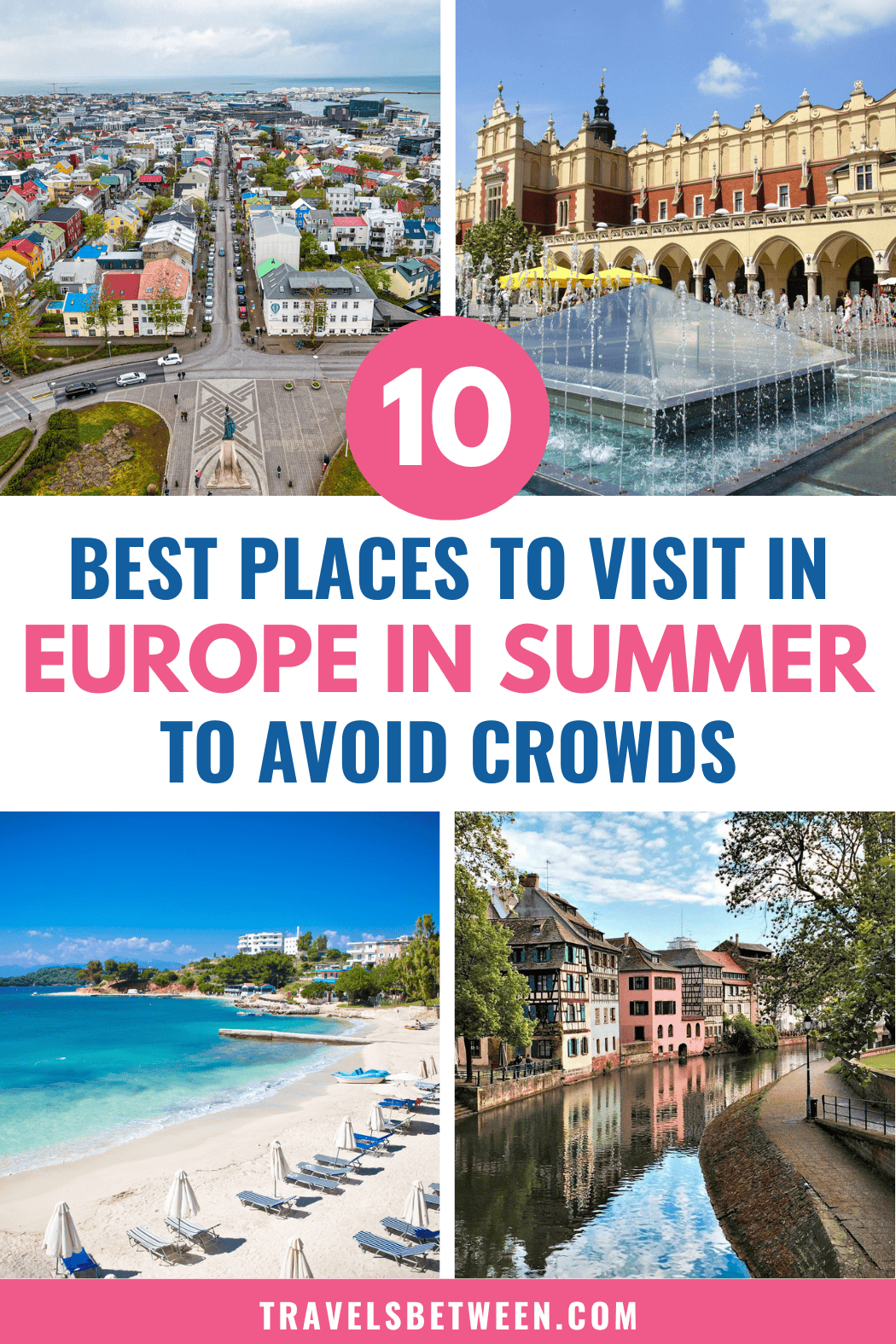
Save This European Travel Guide
Planning a trip to Europe? Be sure to save this list of the best places to visit in Europe in summer. Simply pin the image above to Pinterest. I hope you’ll follow Colleen Travels Between on Pinterest while you’re at it!
Which of these European destinations would you like to visit in summer? Share your thoughts and questions in the comments below!


Seasonal Spotlight
20 Scariest Rides at Disneyland (Ranked for All Ages)
10 Halloween Themed Hotels & Fall Resort Events
25 Best Things to Do in Flagstaff, Arizona
30 Best Indoor Hotel Pools Around the World
50+ Best Things to Do in Scottsdale with Kids
20 Things to Do in San Miguel de Allende (Mexico)